
Energy-Efficient Window Upgrades for Chicago Homes

Energy-Efficient Window Upgrades for Chicago Homes
Living in the Chicago area means facing severe weather extremes. From sub-zero winter blasts sweeping off Lake Michigan to high-humidity summer heatwaves reaching the upper 90s, the local climate puts intense pressure on residential windows await for an upgrade.
For owners of Chicago real estate—whether a classic Victorian in Lincoln Park, a historic brick bungalow in Portage Park, or a suburban home in Naperville—drafty, outdated windows serve as major points of energy loss. Old window systems force heating and cooling units to run continuously, driving up utility bills and creating cold drafts and hot spots throughout the living space.
Upgrading to modern, energy-efficient window systems addresses these issues directly. High-performance glass, insulated frames, and precision seals cut heat transfer, reduce noise pollution, and increase property value.
This comprehensive guide breaks down window technology, frame material comparisons, Chicago-specific energy ratings, financial incentives, and professional installation steps.
1. The Real Cost of Outdated Windows in Chicago
Chicago ranks among the most demanding urban environments in North America for residential HVAC performance. Homes built prior to 2000 often retain original single-pane or early-generation double-pane clear glass windows, which lack thermal breaks and modern Low-Emissivity (Low-E) coatings.
Key Problems with Legacy Windows
- Thermal Conductivity: Single-pane glass has an R-value of roughly R-1, meaning interior heat flows directly outside during winter frost.
- Air Infiltration: Aging sealants, degraded weatherstripping, and warped wood frames create micro-gaps that pull freezing air into living areas.
- Solar Heat Gain: Standard glass allows up to 75% of solar thermal energy to enter the home during summer afternoons, creating harsh greenhouse conditions inside.
- Moisture & Frame Rot: Condensation forms on cold interior glass surfaces when warm, moist home air meets cold panes, causing mold growth, peeling interior paint, and wooden frame decay.
According to U.S. Department of Energy estimates, heat gain and heat loss through windows account for 25% to 30% of residential heating and cooling energy use. In the Chicagoland region, replacing inefficient single-pane or clear double-pane windows with modern ENERGY STAR® certified units can lower annual home energy expenses by hundreds of dollars while protecting the interior building envelope.
2. Key Components of Energy-Efficient Windows
Understanding the anatomy of an energy-efficient window unit makes it easier to select the right replacement options.
A. Insulated Glass Units (IGUs) & Multiple Panes
Modern energy-efficient windows use Insulated Glass Units (IGUs) consisting of two or three panes of glass separated by sealed air spaces.
- Double-Pane Windows: Feature two glass sheets with an insulating gas layer between them. They offer strong base thermal performance for standard residential applications.
- Triple-Pane Windows: Feature three glass sheets forming two independent gas cavities. They deliver high thermal insulation and acoustic dampening, making them well-suited for northern lakefront wind exposures and busy street fronts.
B. Low-Emissivity (Low-E) Glass Coatings
Low-E coatings are microscopic, non-toxic metallic oxide layers applied directly to the glass surface. They reflect infrared radiation (heat) while allowing visible light to pass through.
- Winter Mode: Low-E coatings reflect interior ambient radiant heat back inside the room rather than letting it pass outdoors.
- Summer Mode: The coatings block external solar heat rays from penetrating the home, reducing interior temperatures and protecting furniture, flooring, and artwork from UV fading.
C. Inert Gas Fills (Argon & Krypton)
Instead of standard ambient air, high-efficiency IGUs feature non-toxic, odorless inert gas sealed within the glass cavities.
- Argon Gas: Densified gas that slows heat transfer far more effectively than atmospheric air. It is the standard insulating gas for high-performance double-pane and triple-pane windows.
- Krypton Gas: Denser than argon, krypton offers maximum thermal performance in narrow triple-pane gas gaps.
D. Warm-Edge Spacer Technology
Old windows relied on aluminum spacers to separate glass panes, which conducted cold temperatures directly to the interior glass edge and triggered condensation. Modern units use non-metallic, structural silicone or composite warm-edge spacers that eliminate edge thermal bridging and lower condensation risks.
3. Comparing Frame Materials: Vinyl, Fiberglass & Wood
Window frame selection directly affects thermal efficiency, structural longevity, ongoing maintenance, and exterior aesthetics.
| Feature / Property | Premium Multi-Chambered Vinyl | Structural Fiberglass | Clad-Wood Systems |
| Thermal Insulation (R-Value) | Excellent (R-3.5 to R-4.5) | Superior (R-4.0 to R-5.5) | Superior (R-4.2 to R-5.0) |
| Expansion/Contraction Rate | Moderate to High | Extremely Low (Matches Glass) | Low |
| Maintenance Requirements | Zero painting/staining | Virtually maintenance-free | Minimal exterior clad maintenance |
| Lifespan Expectancy | 20 – 30 Years | 35 – 50 Years | 30 – 45 Years |
| Structural Strength | Moderate | Maximum (Impact Resistant) | High |
| Relative Cost Value | Most Cost-Effective | Higher Investment / High ROI | Premium Architectural |
Premium Vinyl Windows
Engineered with internal multi-chambered air pockets, vinyl frames isolate thermal flow and eliminate cold migration. They do not require painting, resist moisture rot, and deliver strong overall performance for budget-conscious upgrades.
Structural Fiberglass Windows
Fiberglass is an advanced frame material for northern climates. Because fiberglass is made from silica glass fibers, it expands and contracts at virtually the exact same rate as the glass panes inside it. This structural stability prevents seal failures and maintains airtight seals through extreme freeze-thaw cycles.
Aluminum-Clad Wood Windows
Offering traditional wood interiors paired with low-maintenance extruded aluminum exterior cladding, clad-wood windows combine historic appeal with weather protection. They are ideal for historic Chicago neighborhoods requiring specific preservation aesthetics without sacrificing thermal efficiency.
4. Understanding Energy Ratings for Northern Climates
When evaluating replacement windows, review the technical parameters certified by the National Fenestration Rating Council (NFRC) and ENERGY STAR®.
┌────────────────────────────────────────────────────────────────────────┐
│                   NFRC PERFORMANCE RATING MATRIX                       │
│                                                                        │
│   U-FACTOR                  SOLAR HEAT GAIN COEFFICIENT (SHGC)         │
│   Rate of Heat Loss         Amount of Solar Heat Transmitted           │
│   [ Lower is Better ]       [ Balanced Target for North Zone ]         │
│   Goal: ≤ 0.22 - 0.26       Goal: 0.25 - 0.40                          │
│                                                                        │
│   VISIBLE TRANSMITTANCE     AIR INFILTRATION RATING                    │
│   Amount of Daylight        Cubic Feet of Draft Leakage Per Min        │
│   [ Higher is Better ]      [ Lower is Better ]                        │
│   Goal: 0.45 - 0.60         Goal: ≤ 0.10 cfm/sq ft                     │
└────────────────────────────────────────────────────────────────────────┘
- U-Factor (Thermal Transmittance): Measures the rate of non-solar heat transfer through the entire window assembly. The lower the U-Factor, the better the window retains interior heat during freezing weather. For northern climates, target a U-Factor of 0.26 or lower for double-pane windows, and 0.20 or lower for triple-pane systems.
- Solar Heat Gain Coefficient (SHGC): Measures the fraction of solar radiation admitted through a window. In Chicago, a moderate SHGC (0.25 to 0.40) balances winter solar warming with summer heat deflection.
- Visible Transmittance (VT): Measures the amount of natural daylight that passes through the glass. A VT rating between 0.45 and 0.60 maximizes daylighting without requiring excessive glass tinting.
- Air Leakage (AL) Rating: Indicates air infiltration through the window’s frame assemblies under wind pressure. Look for ratings at or below 0.10 cfm/sq ft to prevent drafts during severe winter storms.
5. Architectural Style & Operating Types
Selecting the correct operating style balances historic home design with ventilation and thermal performance.
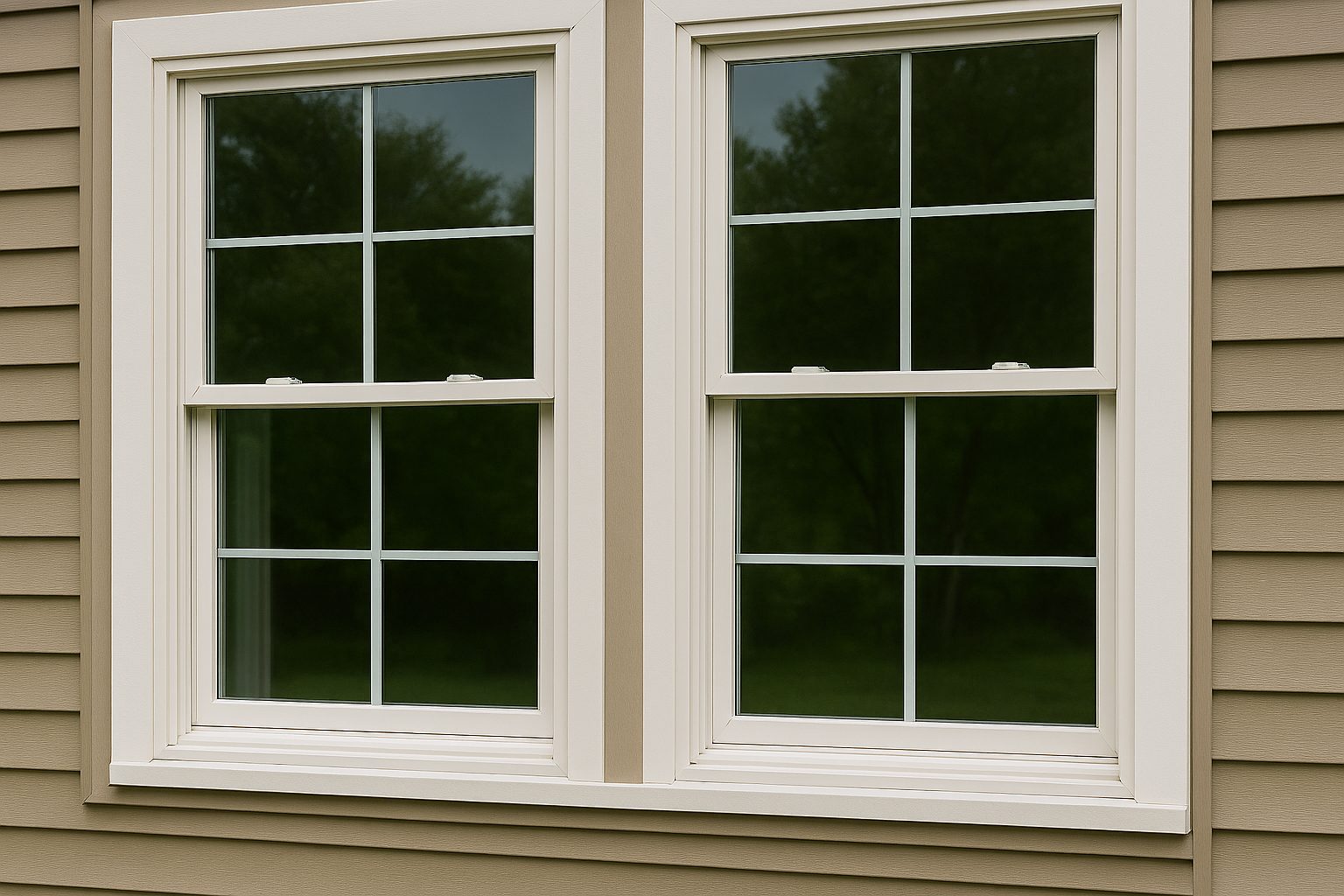
- Double-Hung Windows: Feature two vertically sliding sashes. Modern tilt-in options allow interior cleaning of exterior glass surfaces—a convenient feature for multi-story homes and classic Chicago two-flats.
- Casement Windows: Hinged on the side and operated via an interior hand crank, casement windows swing outward. Wind blowing against casement sashes presses them tighter against the frame weatherstripping, creating an airtight seal.
- Picture & Architectural Shape Windows: Non-opening, fixed glass units offer the highest thermal efficiency performance because they feature no moving mechanical joint gaps.
- Awning Windows: Top-hinged units that open outward, allowing ventilation during light rainfall while protecting interior sill structures.
- Bay, Bow & Custom Garden Units: Multi-window combinations that extend exterior sightlines, creating seating spaces while using insulated head and seat boards to maintain energy efficiency.
6. Financial Savings, Incentives & Tax Credits
Investing in energy-efficient window upgrades provides both immediate energy savings and long-term financial returns.
Energy Bill Savings
Replacing outdated windows directly lowers energy use. Homeowners replacing drafty single-pane units often see 20% to 30% reductions in monthly heating and cooling costs, returning hundreds of dollars to the household budget annually.
Federal Tax Credits
Under the Energy Efficient Home Improvement Credit (Section 25C), eligible homeowners can claim up to 30% of the material cost for qualifying ENERGY STAR® Most Efficient windows, up to federal credit caps. Always save manufacturer certification statements and installation invoices to file with federal tax returns.
Local Utility Rebates & Incentives
Regional electric and natural gas utility providers (such as ComEd and Peoples Gas) offer energy efficiency incentive programs, home assessment credits, and equipment rebates that help offset total project installation expenses.
Real Estate Value & Curb Appeal
Energy-efficient window upgrades consistently rank among the top exterior home improvements for return on investment (ROI). New windows improve exterior curb appeal, modernize interior living spaces, improve acoustic insulation, and provide clear sales advantages in the Chicago housing market.
7. The Importance of Professional Installation
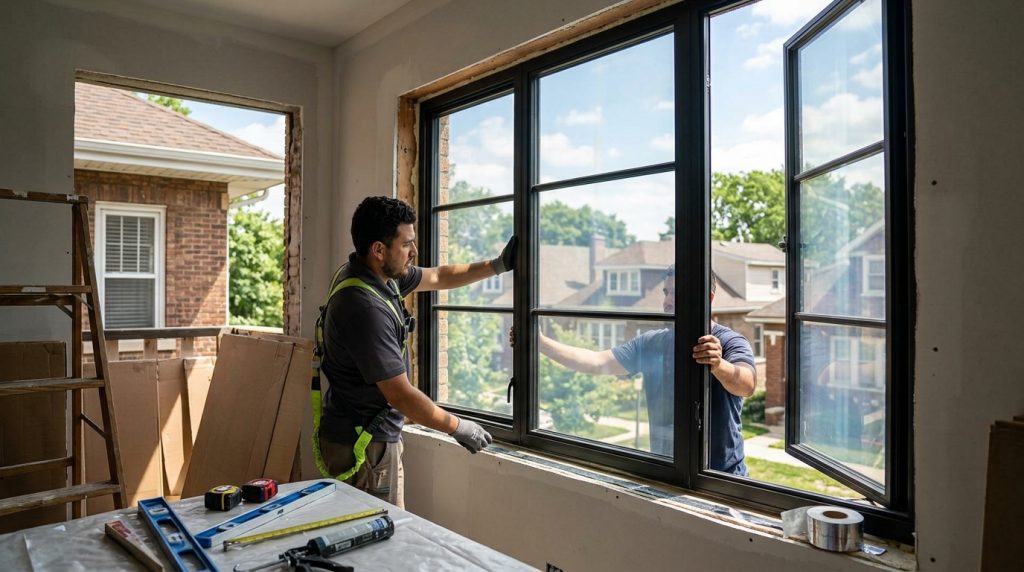
Buying top-rated windows matters little if installation is handled incorrectly. Improper installation compromises the building envelope, leads to water infiltration, voids manufacturer warranties, and leaves energy leaks unaddressed.
Critical Steps in Professional Installation
- Precision Opening Prep: Old frame structures must be inspected for hidden water rot, structural settling, and insect damage before placing new units.
- Waterproofing & Flashing Membranes: Installers apply continuous flashing tapes and sill pans to direct moisture away from internal wall studs.
- Thermal Foam Cavity Insulation: Instead of loosely stuffed fiberglass insulation—which permits air transfer—installers use low-expansion, closed-cell polyurethane foam to fill gaps between the window frame and wall rough opening.
- Custom Exterior Capping: High-grade aluminum coil stock is custom-bent on-site to cover exterior wooden brick molds, sealing out weather and eliminating future exterior trim painting.
8. Why Homeowners Choose 123 Exteriors
Replacing windows is an important home investment. 123 Exteriors delivers clear communication, quality craftsmanship, and reliable product performance across every project
Our team handles the entire process—from initial thermal inspection and precision measurement to final frame installation and job-site cleanup. We ensure every installed window meets strict performance criteria for thermal efficiency, water tightness, and smooth operation.
9. Comprehensive Window Replacement Checklist
Use this checklist to plan your project and compare window options:
- [ ] Identify Cold Spots & Drafts: Check every room for drafts, glass condensation, frame sticking, or high outside noise.
- [ ] Review Current Energy Costs: Gather 12 months of gas and electric bills to establish baseline energy use.
- [ ] Verify NFRC & ENERGY STAR Labels: Confirm that replacement window models are certified for the Northern Climate Zone.
- [ ] Choose the Right Glass Package: Select double-pane or triple-pane glass with Low-E coatings and argon or krypton gas fill.
- [ ] Select Frame Materials: Match vinyl, fiberglass, or clad-wood frames to your maintenance expectations and architectural style.
- [ ] Confirm Professional Installation: Ensure installers use low-expansion insulating foam, proper flashing membranes, and custom exterior capping.
- [ ] Review Warranty Coverage: Confirm lifetime coverage on glass seal failures, frame materials, hardware, and installation workmanship.
Upgrade Your Home’s Efficiency with 123 Exteriors
Stop letting winter drafts and summer heat control your indoor comfort and drive up energy bills. Upgrade to high-performance, energy-efficient windows tailored specifically for Chicago weather.
Schedule your On-Site Window Inspection today and receive a SAME-DAY DETAILED PRICE QUOTE for your upgrade project. Popular Posts